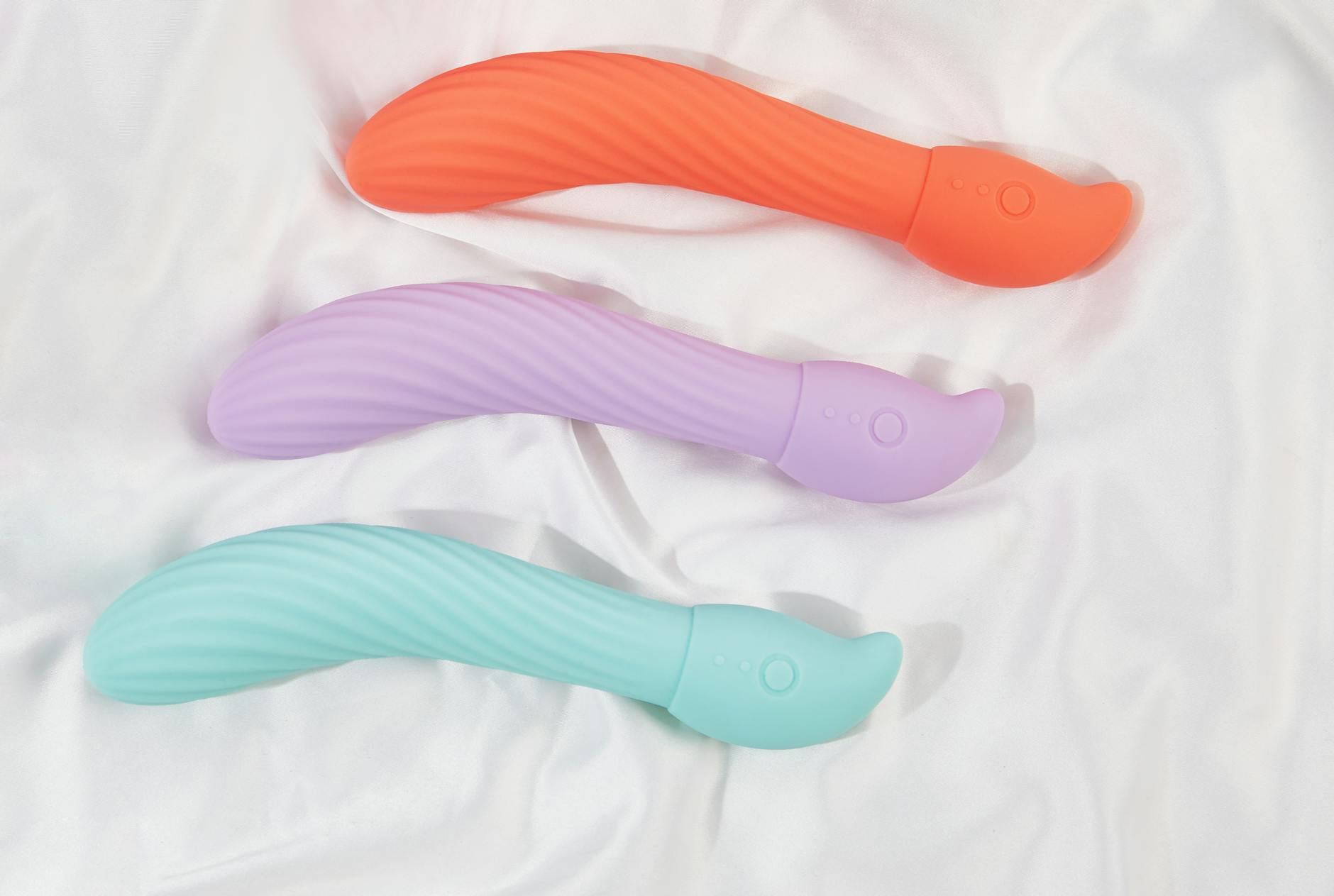
Let's start with what's actually happening
Your body is changing. Between your mid-40s and early 50s, estrogen doesn't drop like a cliff. It wobbles. It spikes and dips unpredictably for years, and during that unpredictability, your tissues respond in real, measurable ways. The vulva has more estrogen receptors than almost any other part of your body. When estrogen fluctuates, your tissues notice.
Here's what I hear from clients: "My lemon vibrator felt perfect three months ago. Now it's either too much or not enough." That's not your device changing. That's perimenopause changing how your body responds.
What estrogen decline actually does to sensation
Estrogen keeps vulvar tissue thick, elastic, and well-supplied with blood flow. When estrogen starts its decline during perimenopause, that tissue gradually becomes thinner and more delicate. The vaginal opening loses some of its natural cushioning. The clitoris itself doesn't shrink, but the tissue around it becomes less forgiving.
This matters because clitoral vibrators, especially lemon clitoral vibrators with their focused suction pattern, rely on tissue elasticity to create that seal and gentle pull. When tissue is thicker, the sensation feels diffuse and comfortable. When it's thinner, the same intensity can feel sharp or unpleasant.
Lubrication also changes. Not because you stop producing it entirely, but because the glands that produce it become less efficient. This isn't about arousal or desire. Your brain can be fully engaged, and your body still won't have the same slip that it once did.
Why lemon sucker technology is actually ideal right now
This is the part that surprises most people: air-suction vibrators like the Lem work better during perimenopause than traditional vibrators, not worse.
Traditional vibrators rely on direct friction. When tissue is thinning, friction can become uncomfortable quickly. Suction, by contrast, creates a gentle pull that stimulates the entire clitoral network without requiring thick, cushioned tissue. The sensation spreads across a wider area instead of concentrating pressure on a single point.
Think of it like the difference between pressing your finger hard into a sponge versus gently cupping it. One requires the sponge to be firm. The other works regardless.
Lemon vibrators are designed with variable patterns and intensities specifically because different bodies need different approaches. During perimenopause, you're likely to find yourself using lower settings than before, but the quality of sensation often improves because the stimulation matches your tissue's current state.
The adjustment protocol that actually works
Here's what I recommend for anyone navigating this transition with a lemon clitoral vibrator.
Start lower than you think you need to. If you used to start at pattern 3 or 4, begin at pattern 1. Spend a full minute there. Your tissue needs time to respond, and rushing through the warm-up defeats the point. Perimenopause bodies often need 15 to 25 minutes of buildup where pre-perimenopause might have been 8 to 10.
Lubrication is non-negotiable now. Water-based lube isn't optional anymore. It's infrastructure. Apply it before you start, reapply mid-session if needed. Your body will thank you.
Progress intensity slowly. Move from pattern 1 to 2 only when pattern 1 no longer feels like enough. This might take several minutes. The temptation is to skip ahead because you remember enjoying higher intensities. Resist. Your tissue's current state is the only baseline that matters.
Pay attention to tissue feedback. If anything feels scratchy, overstimulated, or raw, stop. That's not a sign you're broken or that lemon vibrators don't work for you anymore. It means you've found the ceiling for today. Tissue sensitivity fluctuates during perimenopause, sometimes day to day.
The emotional piece nobody talks about
Here's what I've seen happen: someone's lemon vibrator stops working the way it used to, and they assume their body is failing them. Then they stop using it. Then they stop exploring. Then pleasure becomes a thing they used to do, not something available to them now.
That narrative is completely wrong.
Your body isn't failing. It's shifting. And shifting doesn't mean closing down. It means learning a different language with the device you already have.
Many of my clients report that once they adjust their expectations and their technique, their orgasms become stronger, more full-body, and more satisfying than they were before perimenopause. The clitoris doesn't lose nerve density during this transition. The experience becomes more concentrated, more intentional, and often more pleasurable.
The barrier isn't physiological. It's the grief of "things used to be easier," and that's real. But it's not permanent, and it's not a reason to stop.
When to see a doctor
If lubrication is so absent that water-based lube alone isn't enough, or if intercourse becomes painful even with lube, mention it to your GP. Vaginal estrogen cream or suppositories can make a genuine difference in tissue hydration without systemic absorption. Most people feel relief within two to four weeks.
If your clitoris becomes numb or sensation doesn't return after adjustment, that's also worth flagging. It's rare, but it happens, and it's treatable.
FAQ
Can I use the same lemon vibrator patterns I used before perimenopause?
Most people find they need to start lower, but patterns themselves don't change. Think of it as turning down the volume on your stereo, not switching to a different song. Once your tissue adapts, you might return to higher patterns, or you might find lower ones feel better. There's no "should." Follow what actually feels good.
How long does it take for my body to adjust to perimenopause?
The adjustment happens in stages. Acute tissue changes can stabilize within weeks once you find the right approach. Hormonal fluctuations themselves last years, so you're managing a moving target. Some days pattern 2 is perfect. Other days you'll need pattern 1. That variability is normal.
Is it normal for a lemon clitoral vibrator to feel uncomfortable now when it never did before?
Completely normal. Thinning tissue, reduced lubrication, and changing blood flow all affect how suction-based stimulation feels. Discomfort is your body signaling that the intensity or duration needs adjustment. It's not a device failure. It's tissue feedback.
Should I switch to a different vibrator during perimenopause?
Not necessarily. The lemon sucker design is actually well-suited to perimenopause. Before switching devices, try the adjustment protocol: lower patterns, longer warm-up, consistent lubrication, slower progression. Most people find their lemon vibrator works beautifully once they adapt their approach.
What if my partner wants to engage during this transition?
Communication is everything. Tell them: "My body is changing, and that means we might approach things differently for a while." That's not weakness. That's honesty. Couples who navigate this transition together often report deeper intimacy afterward because they had to actually talk instead of relying on autopilot.
Can I use estrogen cream and still use my lemon vibrator?
Yes. Topical vaginal estrogen and a lemon clitoral vibrator are complementary. The estrogen helps rebuild tissue health over weeks. The vibrator helps you experience pleasure right now. There's no conflict.
The bottom line
Estrogen decline during perimenopause doesn't end your relationship with pleasure or with your lemon vibrator. It changes the details. Lower starting intensities. Longer warm-up. More consistent lubrication. Slower progression. These aren't limitations. They're the new instructions for the same device, adjusted for your body's current state.
Many of my clients say their most satisfying orgasms have come during or after this transition, not before. The device didn't change. They got better at listening to their body. You can too. Head to our buying guide if you're exploring lemon adult toys for the first time, or check out how lemon vibrators work with other tissue changes for a broader understanding of perimenopause and sensation. If you're navigating this with a partner, this piece on emotional reconnection might resonate.
Your pleasure matters. Your body's signals matter. And your lemon vibrator is still exactly the right tool. You're just learning its new language.