Let's name what actually happened
A long pause in sexual activity rewires more than just your body. It rewires your confidence, your sense of ownership over your pleasure, and sometimes your trust in the person next to you. Coming back from that isn't about jumping back to how things were. It's about meeting yourself where you actually are right now.
Here's the thing nobody tells you: the longer you've been away from sexual activity, the more your nervous system has decoupled from arousal as a normal state. That's not a problem to fix. It's information that matters.
Why restarting feels different than you expect
After months or years without sex, three things happen simultaneously.
First, your pelvic floor has essentially gone into neutral. The muscles have relaxed completely, which sounds nice until you realize relaxed muscles actually make sensation feel less intense. It's like trying to hear a song with the volume turned down.
Second, your brain has built new neural pathways around not being sexual. Your mind genuinely doesn't expect arousal the way it used to. When you try to reengage, you might feel weirdly numb or distant from your own body. That's neurological, not a reflection of your capacity for pleasure.
Third, there's often shame layered in. Whether the pause was medical, relational, or circumstantial, most people internalize it as a personal failure. Your body absorbs that story, and your nervous system believes it. Restarting means gently contradicting that belief.

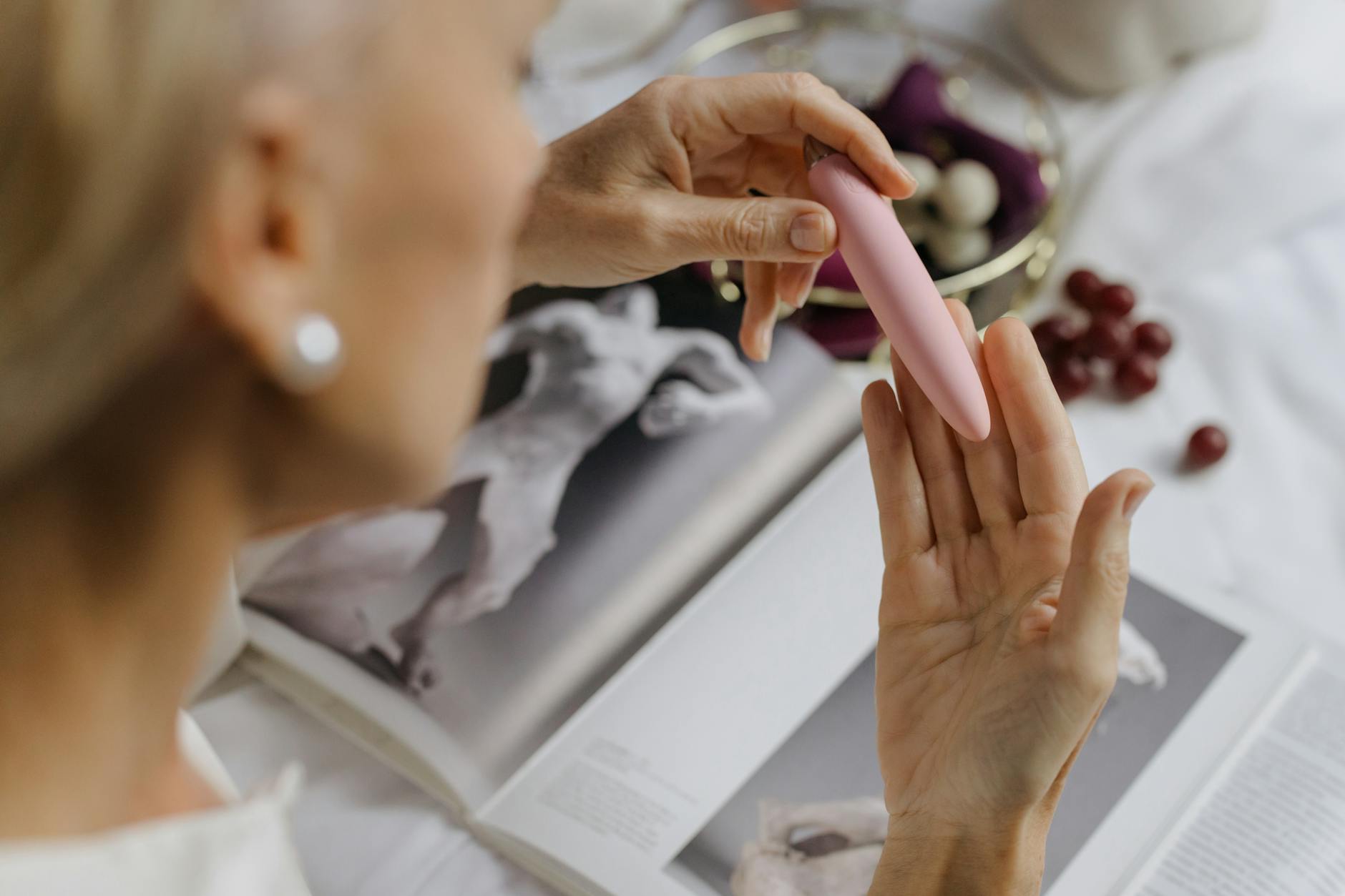
Photo by Madison Inouye on Pexels
Start with solo exploration, not partnered sex
This matters more than it sounds. When you're restarting alone, you get to set the pace entirely. There's no performance, no anxiety about your partner's experience, no clock ticking.
Begin with no expectation of orgasm. Seriously. Put that goal in the corner for now. Your job is to reacquaint yourself with sensation and to prove to your nervous system that pleasure is safe again.
Spend time with your body. Touch your skin, notice what feels good, what feels neutral, what feels uncomfortable. This might take several sessions. That's completely normal.
When you introduce a lemon clitoral vibrator into solo sessions, start at the lowest setting. The Lem vibrator, for example, has multiple intensity levels specifically designed for this kind of gradual engagement. Begin with pattern one. Your nervous system has been in low-gear for a long time. It needs proof that stimulation doesn't mean overwhelm.
The communication conversation that changes everything
If you're doing this with a partner, the conversation happens before you restart, not during.
Tell your partner: "I'm rebuilding my relationship with my own pleasure. That means slow. It means patience. It means I might need to stop sometimes without it meaning anything about you or us." That last part is crucial. Your partner needs to understand that nervous system regulation isn't rejection.
Set explicit boundaries. "I want to be touched this way, not that way right now." "I want you to check in with me." "I want to move at my own pace." Boundaries aren't unromantic. They're the foundation of genuine intimacy.
If your partner pushes back or makes this about their needs, that's information. A partner who can't sit with your healing isn't a partner who can support your pleasure.
How to pace with a partner
The mistake most couples make is trying to rush from touching to penetration to the full experience. That's backward.
Start with non-sexual touch. Massage, cuddling, holding. Your nervous system needs to relearn that touch doesn't automatically mean sex. That separation takes pressure off and actually makes sex hotter later.
When you do move toward sexual touch, bring the lemon vibrator in early. Use it on yourself while your partner is present, but not touching you. This lets them see your pleasure without adding the pressure of performing for them.
Then, gradually, you might move toward partner involvement. They might use the toy on you. They might touch you while you use it. The progression is: you solo, you with them present, you with them assisting, you with them participating.
This could take weeks. That's not slow. That's honest.
The specific technical approach
When you're ready to use lemon sexual toys or any clitoral vibrator during this restart phase, follow this sequence:
First, use external lubrication even if you think you don't need it. Your body may not be producing as much natural lubrication after a long pause, and that's not a sign of arousal damage. It's a sign that you need a tool. Water-based lubricant makes the experience smoother and less jarring.
Second, explore without the vibrator on. Hold it against your body, feel the weight and texture. Some people need their nervous system to recognize it as non-threatening before it turns on.
Third, turn it on at the lowest setting. If the sensation is too much, that's okay. Back off. Your body is literally relearning how to receive pleasure. That takes time.
Fourth, don't aim straight for the clitoris. Explore the whole vulva. Many people find that sensation feels less overwhelming on the outer labia or the mons pubis first. You're teaching your body that pleasure is distributed, not concentrated.
Finally, notice what patterns feel good. Most lemon clitoral vibrators have multiple patterns. Some feel like steady vibration. Others pulse or wave. Your preference might have changed. Let it.
What numbness actually means
You might feel almost nothing at first. That's your nervous system saying, "I'm not sure if this is safe yet." It's not arousal dysfunction. It's protective.
Keep showing up without demanding feeling. Your body is like a relationship that's been neglected for a long time. Trust returns through consistency, not intensity.
If numbness persists after several weeks of regular solo exploration, that might be worth mentioning to a healthcare provider. Sometimes medication, hormonal shifts, or other factors contribute. But most often, the feeling returns just through regular, patient engagement.
The one thing that stops most people
It's the voice in your head saying you should be further along by now. That you should want sex more. That your body should respond faster. That something is wrong with you.
None of that is true. Your body is responding exactly as it should after a long pause. The nervous system is cautious by design. Your job is to be patient with yourself the way you'd be patient with a friend in the same position.

Photo by SHVETS production on Pexels
Frequently asked questions
How long does it typically take to rebuild sexual confidence after a long pause?
There's no standard timeline, but most people see shifts within 4-8 weeks of regular solo exploration. Some take longer depending on what caused the pause. If the pause was medical, relational trauma, or tied to grief, you might benefit from working with a therapist alongside your physical exploration. That combination accelerates things significantly.
Can I use lemon vibrators if I'm still experiencing pain?
Pain is a clear signal to pause and assess. If penetration hurts, that's different from external clitoral stimulation. You can usually use a lemon clitoral vibrator without pain because it's external and non-penetrative. But if any stimulation causes pain, see a healthcare provider. Sometimes pelvic floor tension or other factors need professional attention first.
What if my partner wants to move faster than I do?
That's a compatibility question, not a you problem. Your body gets to set the pace. If your partner pressures you or makes your slow restart about their needs, that's a relational issue worth addressing either between you or with a couples counselor. Real partnership means honoring each other's nervous systems.
Is it normal to feel emotional during or after reconnecting?
Completely. Pleasure and emotion are intertwined. You might cry, feel angry, feel vulnerable, or feel nothing at all. All of that is your nervous system processing a major transition. Let it move through you. Emotions during sex aren't a sign something is wrong.
Should I be using the Lem vibrator or a different lemon sexual toy for this situation?
The Lem vibrator is designed specifically for this kind of gradual engagement because of its intensity levels and suction technology, which many people find less overwhelming than traditional vibration when restarting. But the best tool is one you feel comfortable with. Some people prefer a different lemon clitoral vibrator. Start with what feels least intimidating and adjust from there.
What if I still don't feel ready after several months of trying?
Sometimes "not ready" is actually your body telling you something you need to hear. It might mean the relationship dynamic needs to shift. It might mean you need therapy to process what happened during the pause. It might mean you're on medication that's affecting arousal and you need to talk to your doctor about alternatives. Listen to that signal rather than pushing past it.
The bottom line
Reconnecting after a long sexual pause isn't about forcing your body back to normal. It's about meeting yourself with patience and curiosity. Your pleasure is still there. It's just sleeping. And sleep is designed to end. You just need to wake it slowly.
Take your time. Use the tools that help, like a lemon vibrator. Communicate with your partner about what you need. Most importantly, stop treating this pause as a failure and start treating it as information about what your body and nervous system actually need to feel safe, connected, and alive again.
Ready to explore further or need to talk through your specific situation? Reach out to us at Get Lem Vibrator or check out our guide on rebuilding desire after long-term relationship stress for more nuanced perspectives on this journey.