When desire disappears, it's rarely about sex
Let's be real. When a relationship loses its spark, the first thing to vanish isn't usually the affection. It's the curiosity. You stop wondering what your partner is thinking. You stop turning toward them in bed. And then one day you realize you haven't wanted sex in so long you can't actually remember when you last did.
This isn't dysfunction. It's a signal. Desire is exquisitely sensitive to emotional distance. It's the canary in the coal mine of your relationship.
Here's the thing nobody tells you: rebuilding desire doesn't start with your partner. It starts with you remembering what pleasure feels like when you're not performing, not accommodating, not checking in to see if they're still interested. It starts with reconnecting to your own body as a source of something good, separate from the relationship entirely.
That's where lemon vibrators come in. And I don't mean that as a Band Aid fix. I mean it as a genuine reset button.
Why desire disappears when connection fades
Let me walk through what actually happens neurologically. Desire isn't a fixed thing that lives in your genitals. It lives in your brain's anticipation circuits. When you anticipate pleasure, your dopamine spikes. When you anticipate judgment, boredom, or disconnection, your dopamine tanks. Over months or years, your brain learns to categorize sex with your partner as low-reward, high-effort. So it stops generating desire signals. You're not broken. You're responding exactly as designed.
Emotional intimacy and physical desire are neurologically linked. When you feel unseen by your partner, your body stops showing up. When the conversation has become transactional, when you're managing their emotions instead of sharing your own, desire has nothing to feed on.
The good news is the reverse is also true. Pleasure with yourself rewires your dopamine baseline. It tells your brain "this body can feel good." That's a profound shift.
Starting with solo pleasure as relationship repair
I know this might sound backwards. But if your relationship is going to recover, you need to remember something crucial: your pleasure is yours first. Not your partner's job. Not a performance metric. Yours.
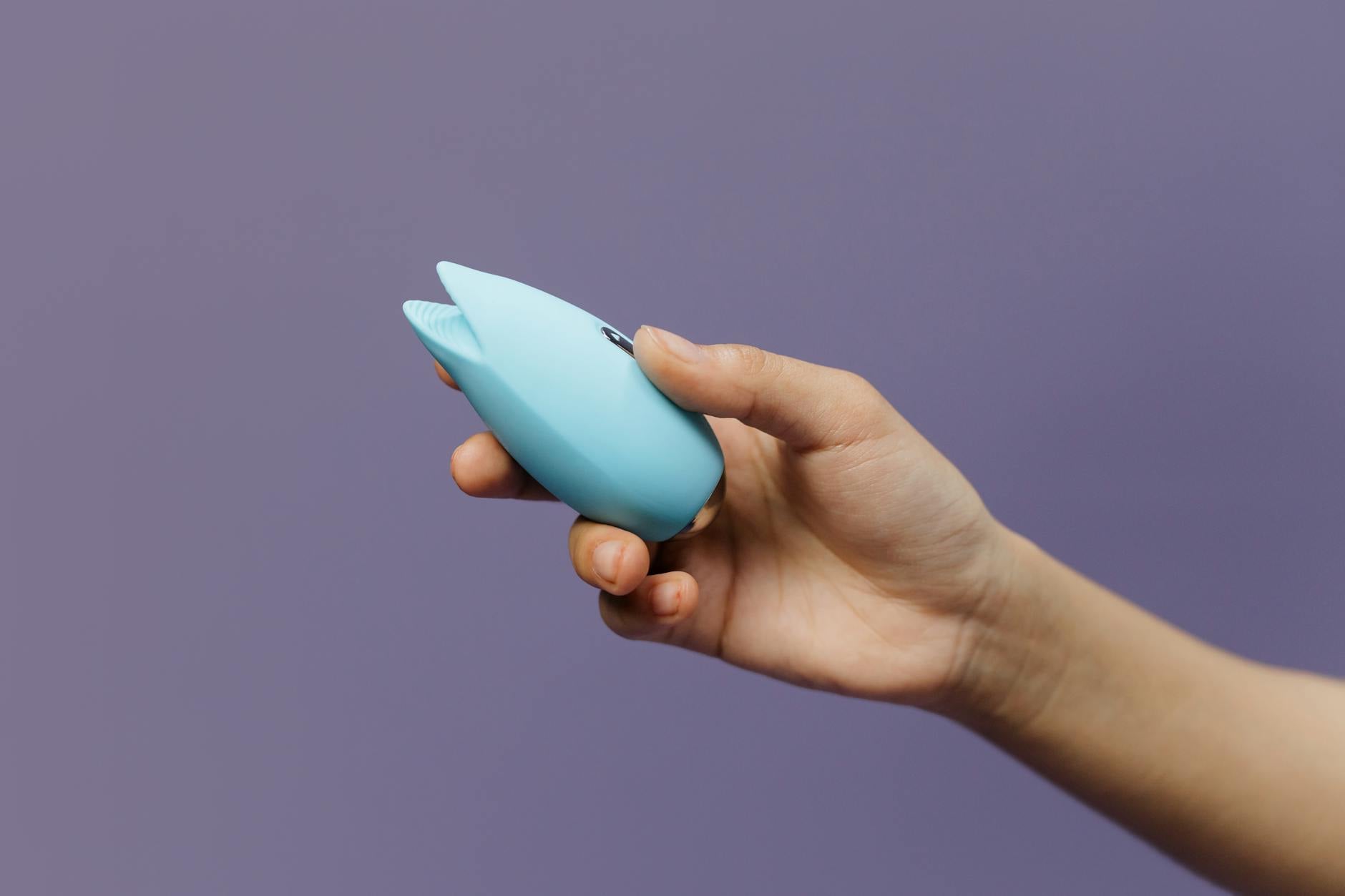
This is why I recommend lemon clitoral vibrators specifically for this phase. Air suction devices like the Lem create a very different sensation from penetrative sex or manual stimulation. They're focused, intentional, and they require you to stay present in your own body rather than monitoring your partner's response.
Here's what solo exploration with a lemon vibrator does:
It reestablishes the connection between your brain and your sensation. You're not rushing. You're not accommodating. You're not watching the clock. You're just learning what makes your specific body light up. That's not selfish. That's the foundation.
Building a solo pleasure practice
If desire has been flatlined for months or years, jumping back into partnered sex won't work. Your nervous system needs to learn that pleasure is safe again. That it's not going to be met with pressure or expectation.
Set aside time. Not after 11 p.m. when you're tired. Not squeezed between work and dinner. Real time. Twenty minutes where you can be fully present. No phone. No mental math about whether your partner is waiting for you.
Start low. If you're using a lemon vibrator for the first time after a long dry spell, begin on pattern one or two. Your nervous system might be rusty. That's not weakness. Easing in builds anticipation and helps your body remember how to respond.
Pay attention to what actually feels good. Not what you think should feel good. Not what your partner used to prefer. Not what porn suggests. What does your body like right now? Some people find the Lem's suction feels best at the base of the clitoris. Others prefer direct contact on the head. Some like to use it over underwear. Your job is to find out.
When you're ready to involve your partner again
Once you've spent a few weeks reconnecting with your own pleasure, something shifts. You stop being terrified of sex. You stop seeing it as a failure waiting to happen. You remember that your body can do something. That it's worth attention.
That's when introducing your partner matters. Not before.
When you do bring them back into this, here's what actually works: you need to separate two conversations. One is "I want us to reconnect." The other is "I'm bringing this tool into our sexual life together." Mixing them guarantees confusion.
Many couples try to rebuild desire by adding complexity. They introduce toys, roles, novelty. That's backwards when the actual problem is disconnection. What actually restores desire is simple presence. Being in the room with each other without the pressure to perform.
Suggesting that you'd like to explore a lemon vibrator together can be genuinely powerful if you frame it right. Not "I need this because you're not enough." Try "I've been feeling more connected to my own body again and I want to explore that with you. I'd like to show you what feels good." That's inviting, not blaming.
The emotional work underneath
Here's what I need you to know as a relationship therapist. A vibrator won't fix a broken relationship. But it will give you something concrete to work with while you address the actual break.
While you're rebuilding pleasure, you also need to be rebuilding the emotional connection that desire depends on. That means harder conversations. It means showing up. It means vulnerability about what actually killed the spark for you.
Maybe it was years of unspoken resentment. Maybe one of you pulled back and the other followed. Maybe there's been actual betrayal. Whatever it is, lemon vibrators won't repair it. But reconnecting to your own desire gives you the emotional bandwidth to do that work.
If you've tried this for several weeks and you're still feeling completely flat, that might be a signal that the disconnection runs deeper than a typical fading-spark situation. That's when couples therapy matters. Not as a last resort. As a real tool.
What success actually looks like
You're not aiming for the spark to suddenly reignite like it's 2008 again. That's not realistic and frankly not the goal.
Success looks like: you feel curious about your own body again. You initiate sex sometimes because you actually want it, not out of obligation. You feel a little more seen by your partner. There's less resentment in the room. The sex is slower and more intentional than it used to be.
Success also sometimes looks like: you do all this work and realize the relationship actually isn't working. That's real too. And at least you know it from a place of clarity rather than shutdown.
Most of the time, when one person in a couple starts rebuilding their own desire and showing up more fully in their body, something shifts in the other person too. Not always magically. But often. Because desire is contagious. Presence is contagious. Pleasure is contagious.
FAQ
How long does it take to rebuild desire after a relationship fades?
There's no fixed timeline. Some people feel shifts within two to three weeks of consistent solo exploration. Others need months. The more emotionally disconnected you've been, the longer the rewiring usually takes. Be patient with yourself. Your nervous system has learned a lot over years of emotional distance. It'll take time to learn something new.
Can I use a lemon vibrator if I'm not even sure I want to have sex anymore?
Absolutely. In fact, that's often the perfect time to start. You're not trying to perform or prove anything. You're just exploring sensation without pressure. That removes a huge barrier. Many people find that using lemon clitoral vibrators solo actually builds curiosity rather than assuming interest exists first.
What if my partner feels threatened by me using a vibrator?
That's a separate conversation from the tool itself. Many partners worry that a vibrator means they're not enough. The reality is the opposite. Solo pleasure with a lemon vibrator actually helps you be more available for partnered sex because your nervous system isn't starving for sensation. That said, if your partner's insecurity is preventing you from exploring your own body, that's a relationship issue worth addressing in therapy.
Should I tell my partner I'm using a lemon vibrator if I'm using it solo?
That depends on your relationship. Some couples are very open about solo exploration. Others keep it private. Neither is wrong. What matters is that you're not sneaking around out of shame. If you're genuinely exploring your own pleasure, not hiding it out of fear, that's healthy. If you're hiding it because your partner has made you afraid of your own sexuality, that's a sign of a bigger problem.
Can lemon vibrators help even if my relationship is on the brink?
They can help you clarify what you actually want. Using a vibrator solo might help you remember that you have desire in you at all. That clarity matters. You might decide to fight for the relationship with new energy. Or you might decide to leave. Either way, you're choosing from a place of "yes" rather than "I'm too numb to decide."
How do I introduce this conversation if we haven't talked about sex in years?
Start small. You don't need to announce "I'm rebuilding my sexuality." You can simply say "I've realized I haven't been present in my own pleasure for a while and I want to change that. I'm going to take some time to explore what feels good to me." If your partner asks questions, answer them honestly. If they don't, you don't need permission to reconnect to your own body.
Getting started
Rebuild desire by starting with yourself. Get Lem Vibrator's lemon clitoral vibrators are designed for extended exploration without fatigue. Use one solo for a few weeks. Notice what your body responds to. Let your nervous system remember that pleasure is available to you.
Then decide what happens next. Sometimes it's reconnection with your partner. Sometimes it's the clarity to leave. Either way, you're choosing from wholeness instead of shutdown.
If you need support navigating this, reach out to us. We're here to help.