
Here's the thing about pain during sex
It's not a signal to stop having sex. It's a signal that the way you've been having sex needs to change. Between you and me, that shift is often the best thing that happens to a relationship, even though it doesn't feel that way when you're in pain.
When penetration triggers discomfort, couples usually fall into one of two traps. The first is avoidance: you both pretend it's not happening until sex stops altogether. The second is forcing through, which builds resentment and teaches your body that sex is something to brace for. Neither works. What works is pivoting to external clitoral stimulation, which is why lemon clitoral vibrators become genuinely life-changing in this situation.
Why penetration pain happens (and why lemon vibrators matter)
Pain during penetration comes from a handful of places. Tension in the pelvic floor muscles (which tighten reflexively when you expect pain). Insufficient lubrication, whether from hormonal shifts, medications, or anxiety. Vaginal or vulvar tissue that's thinner or more sensitive due to estrogen changes. Scar tissue from childbirth or surgery. Sometimes it's medical, sometimes it's psychological, sometimes it's both tangled together so tightly you can't separate them.
Here's why this matters for lemon vibrators specifically: a lemon clitoral vibrator removes the pressure. Literally. When penetration is painful, the brain anticipates pain during penetration. Your nervous system learns the association. Partnered sex becomes something you're managing rather than enjoying. Shifting to external stimulation with a lemon sucker breaks that loop entirely. Your body gets to experience pleasure without the triggering sensation. Over time, that rewires what sex means.
I've worked with couples where external stimulation becomes the main event rather than foreplay. Sometimes penetration returns comfortably later. Sometimes it doesn't, and they realize they prefer the new arrangement. Both outcomes are wins because pleasure is back.
The solo practice that changes everything
Before you bring a lemon clitoral vibrator into partnered sex, spend time alone with it. This sounds basic, but it's critical. When pain has been part of sex, your body is in a protective state. Using a lemon vibrator solo allows you to explore sensation without the pressure of someone watching, without the anxiety of causing pain to a partner, without any script at all.
Start with the Lem on its lowest setting. There's no rush. Spend time noticing what patterns feel good, what areas of the clitoris respond best, how long arousal takes. You're literally remapping pleasure after pain has disrupted it. This is not masturbation as foreplay. This is therapy.
Many people find that solo exploration with a lemon sexual toy reveals something surprising: they can orgasm more easily than they thought, and differently than during partnered sex. That information is gold. It tells you what your body actually needs, rather than what you assumed it needed.
How to introduce it with a partner (without making it weird)
The conversation matters more than the toy. Don't hand them a lemon vibrator mid-sex and expect it to feel collaborative. Instead, name what's happening plainly. "Sex with penetration has been painful for me. I want that to change. I want us to have pleasure together. One thing that helps is external stimulation. I'd like to try that."
That sentence does several things at once. It names the problem without blame. It signals that you want connection, not rejection. It offers a solution that involves both of you. Most partners respond well to that clarity.
When you do use a lemon clitoral vibrator together, position yourself so you can guide it. You know your body better than anyone. If they're holding it, your hand can rest over theirs so you're directing pressure and speed. If you're holding it, they can focus on touch elsewhere. Entry happens, or it doesn't. The clitoral stimulation is the main course, not the opening act.
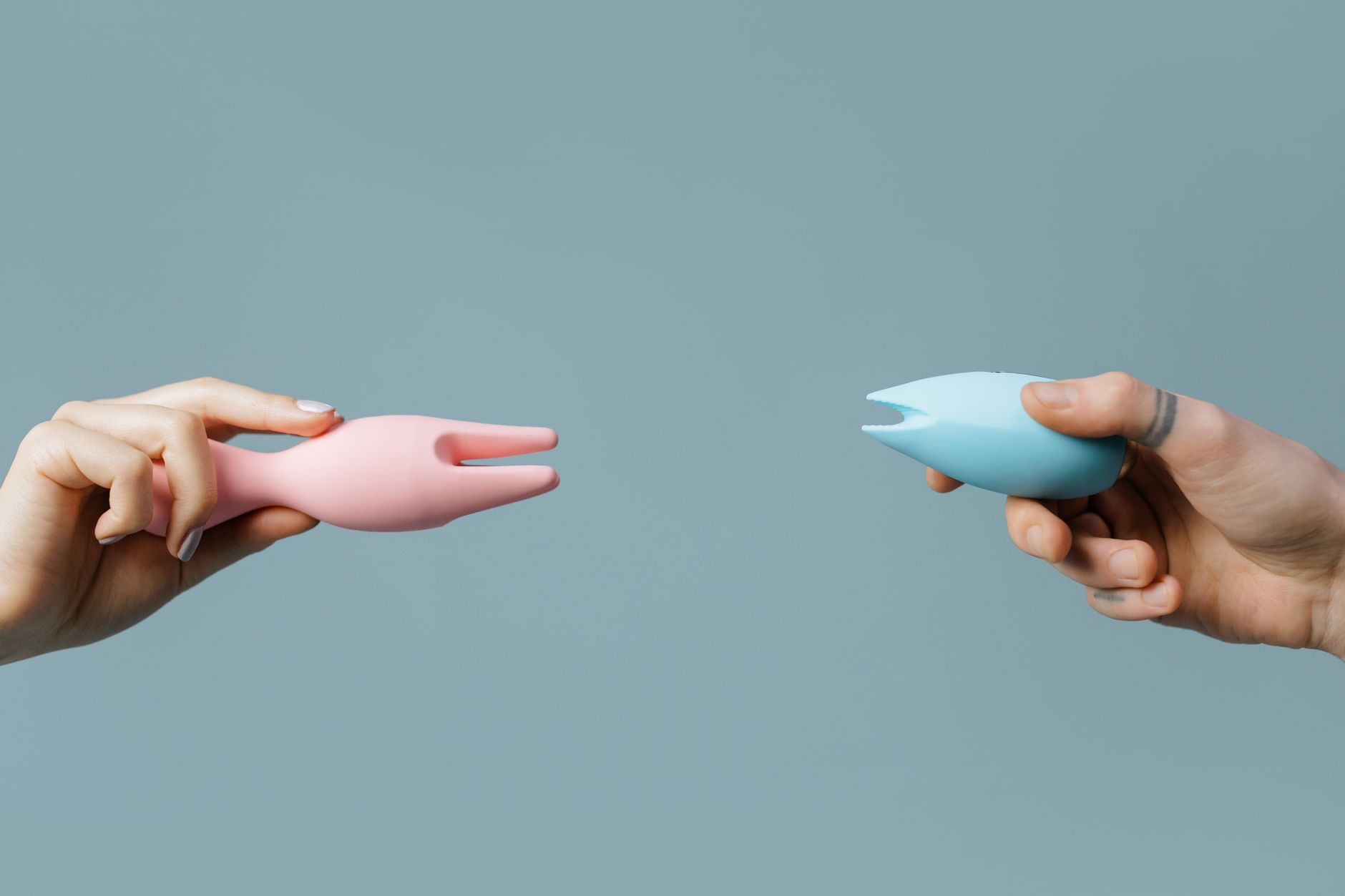
Photo by cottonbro studio on Pexels
The rhythm that actually works
When penetration has been painful, partnered sex needs a different architecture. Here's what I recommend:
Phase 1: Connection and arousal. Touch, kissing, all the things that build desire. No pressure to move forward. Spend 10 to 20 minutes here. Your nervous system needs to feel safe.
Phase 2: External stimulation. Introduce the lemon clitoral vibrator. If entry feels good and comfortable at this point, it can happen alongside the vibration. If it doesn't, keep going with external stimulation. Pleasure is the goal, not progression through stages.
Phase 3: Whatever comes next. Orgasm, continued stimulation, rest, penetration, or moving on. There's no "should." The lemon vibrator isn't a stepping stone to something else. It's the event itself.
Many couples find that this structure feels better than their old rhythm anyway. Presence replaces performance. Pleasure becomes mutual and explicit rather than assumed.
When anxiety keeps showing up
Sometimes pain creates anxiety that outlasts the physical cause. Your brain has learned to expect discomfort, and that expectation tightens muscles and kills arousal. A lemon sexual toy can help, but so does slowing down even more than you think necessary.
If you find yourself tensing up when penetration is about to happen, pause. Let your partner know what's happening. "I'm getting tense. This isn't about you. I need us to slow down." Then go back to external stimulation, touch, breathing. Your pelvic floor needs time to learn that sex is safe again.
Some people benefit from pelvic floor physical therapy alongside this work. A PT can identify where tension lives and teach you to release it. That's a separate conversation with a specialist, but it works beautifully in tandem with pleasure-based practices.
The thing about penetration you haven't heard
Here's what gets erased from most sex advice: penetration is not essential to good sex. You've been told it is. The culture has told you it is. But physiologically, the clitoris is where orgasms mostly come from, and the clitoris is external. The vaginal opening and lower vagina have some sensation, but far less nerve density than the clitoris. This is basic anatomy.
When penetration is painful, your body is not asking you to fix it and push through. It's asking you to reorganize your understanding of what sex is. And when you do, using lemon clitoral vibrators as part of that reorganization, something shifts. Sex stops being about reaching a particular destination and starts being about feeling good right now.
That's not a compromise. That's an upgrade.
When professional help is the right move
If pain is severe, or if it hasn't improved after a few months of different approaches, see a gynecologist or a pelvic floor physical therapist. Sometimes there's an identifiable cause like endometriosis, vaginismus, or vulvodynia. Sometimes it's scar tissue that benefits from treatment. A professional can rule those out and give you a roadmap.
You might also work with a sex therapist, especially if anxiety is a big part of the picture. They can help you and your partner untangle the psychological layers while you're rebuilding physical pleasure.
The point is that pain during sex is solvable. It usually requires patience and a shift in approach. And lemon vibrators, with their focus on external clitoral stimulation, are one of the clearest ways to make that shift feel good for everyone involved.
FAQ: Pain, pleasure, and lemon clitoral vibrators
Why do lemon vibrators help when penetration is painful?
Lemon clitoral vibrators remove the pressure to have penetrative sex while keeping pleasure on the table. When penetration triggers pain or anxiety, your nervous system gets stuck in a protective loop. Shifting to external stimulation breaks that pattern and gives your body permission to feel good again. Over time, that can ease both the physical symptoms and the psychological ones.
Should I use a lemon vibrator every time we have sex now?
Not necessarily. Some couples find they prefer external stimulation as the main event and use it every time. Others find that after a few months of pleasure-focused sex with a lemon clitoral vibrator, penetration becomes comfortable again and they use both. Listen to your body. If you're building pleasure and trust, you're on the right path.
What if my partner is uncomfortable with the lemon vibrator?
That's worth exploring. Sometimes partners worry the toy means they're not enough, or they have their own baggage about toys. A straightforward conversation helps. "This isn't about you. This is about my pleasure and my healing. I want us to share that." If they're still resistant, couples therapy can help navigate that together. Your pleasure matters, and a partner who won't support your comfort deserves some reflection.
Can I use a lemon vibrator during penetration?
Absolutely. Many people use a lemon sexual toy externally while their partner is inside. The combination of penetration with clitoral stimulation often feels better than either alone, and it takes pressure off penetration feeling like it needs to be enough by itself.
How long does it usually take to feel comfortable with sex again?
It varies wildly. Some people feel a shift after a few sessions. Others need weeks or months for their nervous system to really believe sex is safe. There's no timeline. The goal is consistency and patience, not speed.
Is pain during sex ever "just in your head"?
No. Even when anxiety is a factor, the pain is real. Your brain and body are connected. Anxiety can trigger pelvic floor tension and reduce lubrication, which creates actual physical pain. So while the underlying cause might be psychological, the sensation is genuine. That's why addressing both the physical experience and the psychological side matters.