Let's talk about the five-minute orgasm myth
You know the one. Early sex feels fast. Brain chemistry, new partner energy, novelty. But then life happens. You get older, your body shifts, stress creeps in, or you and your partner settle into a rhythm that's less frantic. And suddenly arousal doesn't light up in 90 seconds anymore. It takes 10 minutes. Or 20. Or you need a specific kind of touch to get going at all.
Here's what I tell people: that's not a malfunction. That's an upgrade disguised as a slowdown.
Why arousal actually slows down (and it's not what you think)
Physiologically, several things are at play. Cortisol (stress hormone) directly suppresses arousal chemicals. Hormonal shifts, whether from aging, medication, or life transition, genuinely change how fast blood flows to genital tissue. The nervous system gets pickier about what registers as safe and sexy. That's all real.
But here's the part nobody mentions: slower arousal often coincides with deeper self-knowledge. You know what actually turns you on now, not just what you thought was supposed to. You're less likely to fake it. You have less bandwidth for partner energy that doesn't match yours.
The friction isn't that you're broken. The friction is that you're trying to fit a different body into an old timeline.
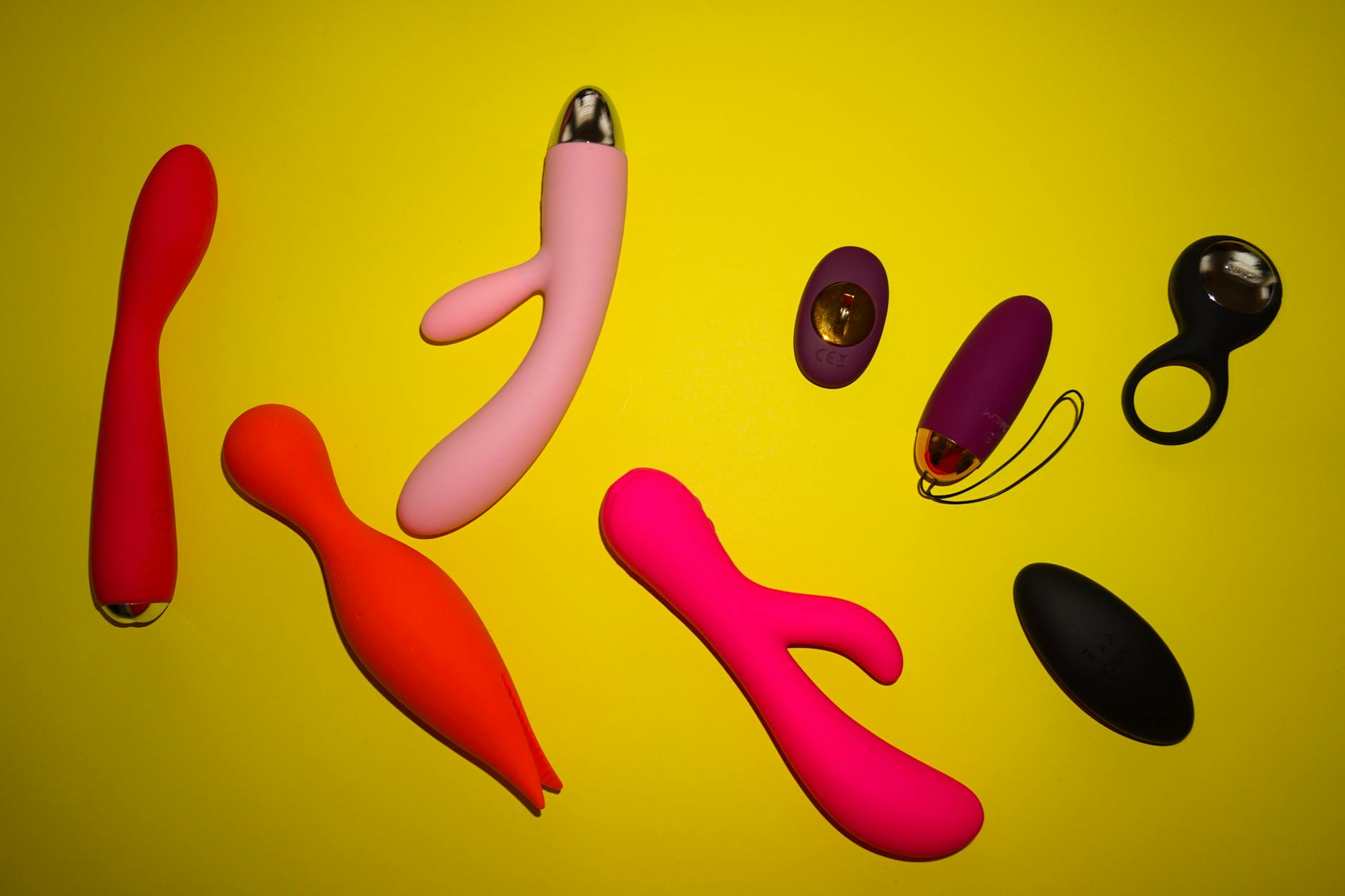
Photo by DRT.fm on Pexels
The difference between "slow to warm up" and "needs different input"
I spend a lot of time helping couples untangle this one. Because slow arousal can mean two totally different things.
Scenario A: Your body still responds to the same touch, but it takes 20 minutes instead of 5. You're mentally present. You want it. The pathway is there; it just takes longer.
Scenario B: Your body responds better to different input. Maybe direct clitoral stimulation never worked that well, and now it's the only thing that does. Maybe you need mental engagement (a book, a fantasy, a conversation) before physical touch lands. Maybe partnered touch works slower than solo, or vice versa.
Most people don't distinguish between these. They assume they're the same problem and reach for the same solution. That's why vibrators get a bad rap for slow arousal. Most vibrators amplify existing patterns. If direct stimulation wasn't your strongest route to begin with, a generic wand won't suddenly make it one.
But a lemon clitoral vibrator using suction instead of vibration? That's different input. It can wake up a nervous system that's become habituated to friction. It can feel almost foreign because the sensation is genuinely novel.
Why suction works when standard vibration doesn't
Standard vibrators buzz against tissue. Your nervous system acclimates quickly to repetitive input. You need more intensity to feel the same effect. It's called habituation, and it's a real neural process.
Suction stimulates differently. It pulls rather than pushes. It creates pressure waves instead of pure friction. And because it's less common, less expected, your nervous system doesn't tune it out the same way.
For people with slow arousal, especially slow arousal paired with some numbness or reduced sensation, this matters. A lemon vibrator can build sensation more gradually because the input is varied and unexpected. You're not reaching for maximum intensity immediately. You're building from lower settings in a way that actually engages your body.
The practical setup when arousal takes time
Here's what I recommend to almost everyone in this position:
Start earlier than you think you need to. If you used to have 5-minute foreplay and now you need 20, block 30 minutes. Not because you have to use all of it, but because you're not fighting the clock. Anxiety kills arousal faster than anything else.
Build in a transition. If you're partnered, spend the first 5-10 minutes on non-genital touch. Hands, neck, thighs, back. Let your nervous system shift out of daily mode first. Then move to genital focus.
Start your lemon vibrator on lower settings. You don't need to go straight to pattern 5. Patterns 1-2 on a quality clitoral vibrator can build sensation without overwhelming. You can always turn it up.
Alternate sensation. Don't run the same vibrator pattern for 15 straight minutes. Forty seconds of suction, then a break. Then back. This keeps your nervous system from habituating and gives you natural rhythm.
Use lubrication even if you think you don't need it. When arousal is slow, tissue responsiveness is already slightly lower. A water-based lube makes everything feel more easily pleasurable, and it reduces the friction that can feel irritating rather than good.
What to actually say to a partner about this
Most of my clients with slow arousal are partnered, and they're embarrassed. They think slowness is something to apologize for or explain away. It's not.
"My arousal works better when we don't rush" is a complete sentence.
You don't need to medicalize it or pathologize it. You don't need to say, "My hormones are shifting and my nervous system has changed responsiveness." You can just say: "I need more time now. Let's build it differently."
If you want to incorporate a lemon vibrator into partnered sex, try it first solo. Know how it feels on you. Then introduce it as "something I want to try together" or "something I want us to explore." Frame it as expansion, not correction.
Partners who are worth your time will actually like this. Slower arousal means longer foreplay. Longer foreplay means more extended pleasure, more varied sensation, less pressure to perform. That's not a liability. That's a feature.
When slow arousal is actually depression or disconnection
Here's the hard part I have to say: sometimes slow arousal isn't just physical. Sometimes it's a sign you need a different conversation entirely.
If arousal has disappeared almost completely, not just slowed. If it's paired with low mood, sleep disruption, or anhedonia (nothing feels good, not just sex). If the slowness is new and accompanied by anxiety. Then this might be depression wearing a sexual disguise.
In that case, a lemon vibrator helps, but a therapist helps more. Get both.
Similarly, if arousal only slows with your current partner but works fine solo, the problem isn't your body. It's the relationship. That's not shameful information. That's directional information. Use it.
The things that actually matter
Slowness isn't a flaw you're trying to fix. It's information about how your body works now. The goal isn't to speed up to your previous baseline. The goal is to know yourself well enough to design an experience that works.
A good lemon clitoral vibrator is one tool for that. But it works best alongside honesty: about your timeline, your actual preferences, and what your body needs right now. Not what it needed five years ago. Not what you think you're supposed to want. What you actually want.
Start there. The vibrator follows.
People Also Ask
Why does my clitoral vibrator make arousal feel even slower?
If a vibrator is making arousal slower, it's usually the wrong vibrator or the wrong approach. Standard vibration can feel irritating rather than pleasurable if your arousal is already sluggish. This is why suction-based clitoral vibrators work differently. They create varied sensation instead of repetitive buzzing. If a standard vibrator isn't working, try a different input entirely. And check: are you using lube? Are you starting on too-high intensity? Those are the most common mistakes.
Is slow arousal a sign of lower libido?
Not necessarily. Libido and arousal speed are different. You can have high desire but slow arousal. Slow arousal just means your nervous system takes longer to activate the physical response. It doesn't mean you want sex less or that you're broken. It means you need a different timeframe and often different input to get there.
Can medication slow arousal?
Absolutely. Antidepressants, birth control, blood pressure medications, and antihistamines can all slow arousal or reduce sensation. If you started a new medication and your arousal timeline shifted, that's worth discussing with your prescriber. Sometimes switching medications helps. Sometimes a lemon vibrator helps work with what you have. Sometimes you need both conversations.
Should I use a lemon vibrator if arousal takes a long time?
Yes, potentially. But only if you're using it strategically. Don't use it as a speed hack. Use it as a way to build sensation gradually through varied input. Start on lower patterns. Take breaks. Let your nervous system engage with novelty. That's where the benefit actually lives.
How do I know if my arousal slowdown is normal or a medical issue?
If the slowdown was gradual and paired with other life changes, it's probably normal. If it was sudden and accompanied by pain, dryness, mood changes, or other symptoms, talk to a doctor. A lot of things can affect arousal speed. Most are treatable. Many don't need treatment. You just need the right information.