Let's talk about what happens when pleasure goes quiet
A long dry spell isn't a character flaw. Life gets in the way. Stress, illness, relationship distance, grief, depression, medication changes, parenting overload. Sometimes pleasure just slides off the priority list and stays there so long that restarting feels embarrassing or impossible.
Here's the thing: your body hasn't forgotten how. Your nervous system hasn't lost its capacity. But your mind might be running interference, and that's where we start.
Why restarting is harder than you think
It's not just a physical issue. When pleasure has been absent for a long time, your brain builds a story around it. Maybe you've convinced yourself that you're "not that person anymore." Maybe you're worried your partner will judge the gap. Maybe you're genuinely grieving the version of yourself who had desire easily, without friction.
All of this is real. And all of it is in the way.
Physically, your pelvic floor muscles have gotten tighter (that's what happens with long absence). Your arousal system is a bit dusty. Lubrication takes longer to arrive. These are facts, not failures. They shift with practice and intention.
The three-part restart framework
I work with a lot of clients rebuilding intimacy after dry spells, and the ones who succeed follow a pattern. It's not complicated, but it requires honesty.
Part one: permission. You have to actually decide that your pleasure matters. Not "eventually, when things settle." Now. That decision is the hard part. The rest is logistics.
Part two: solo practice. Before a partner gets involved (or even if you're partnered), you need private time with your own body. No performance. No outcome pressure. Just you learning what feels good again.
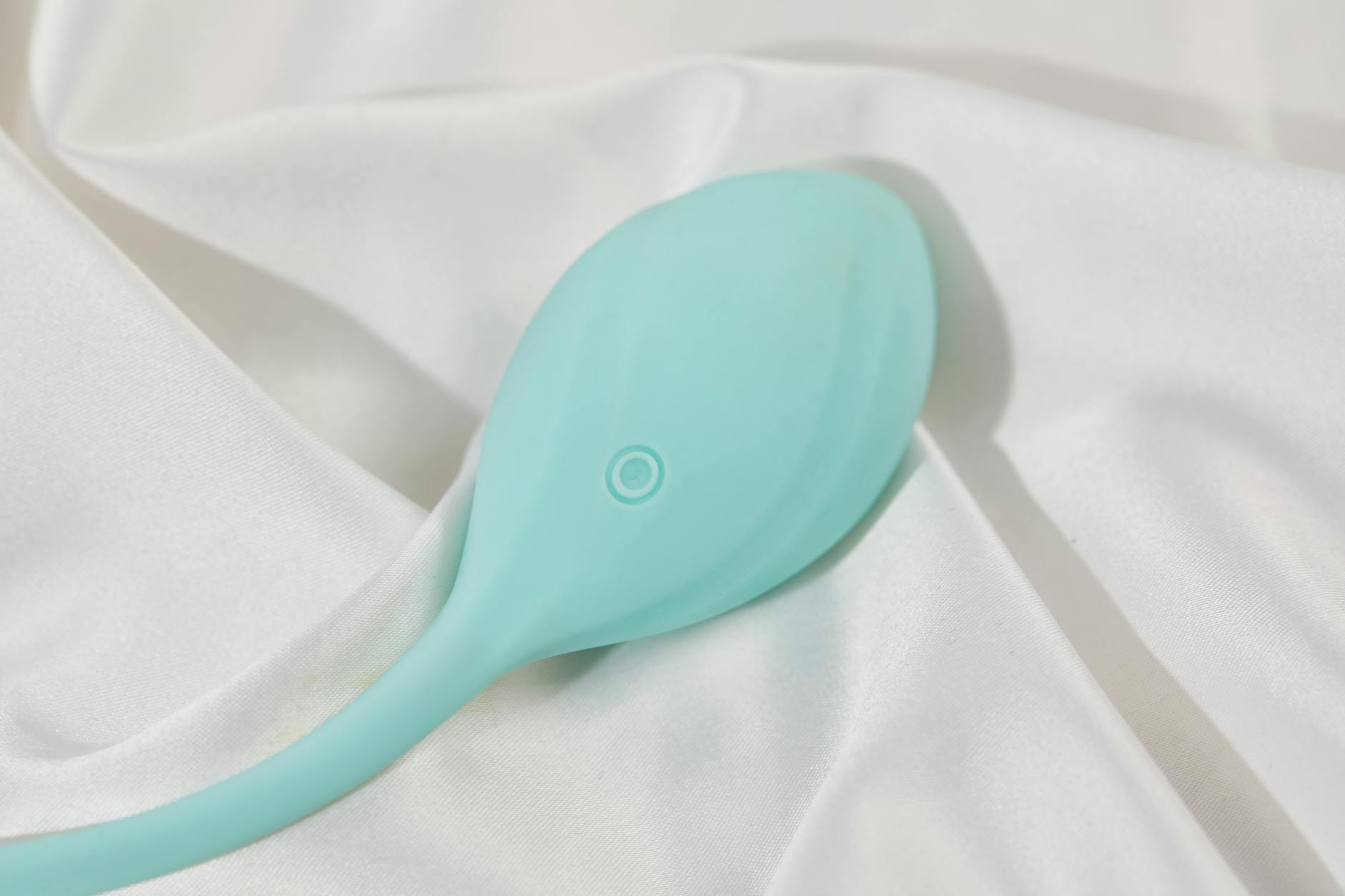
Part three: tools that lower the barrier. This is where clitoral vibrators, especially air suction ones like the Lem, become genuinely useful. They remove friction, reduce the effort required, and give your nervous system permission to relax.
Starting your solo practice
Set aside 20-30 minutes when you won't be interrupted. Not when you're exhausted. Not right after stress. Choose a moment when your nervous system is already a bit calm.
Start clothed. Light touch on your arms, neck, inner wrists. Notice what feels good. You're not trying to get anywhere. You're gathering information about what your current body enjoys. This part takes weeks for some people. That's fine.
Add some kind of lubricant as you go. Water-based works with any toy, including air suction clitoral vibrators. Silicone-based feels richer but restricts toy options. Start with water-based. Your touch will work better, toys will glide more easily, and the sensation itself becomes part of the awakening.
Move toward your genitals slowly. If shame comes up (it often does), name it. "I notice I feel self-conscious." Then keep going anyway. The shame doesn't go away by avoiding the area. It dissolves through gentle exposure and pleasure together.
Why air suction vibrators work so well for this restart
When you've been absent from pleasure for a long time, direct stimulation can feel too intense. Your nerve endings are sensitive in a raw way, not in a good-ready way. They need something that feels more like a massage or a caress than a buzz.
Air suction technology (like the Lem clitoral vibrator) works differently from traditional vibrators. Instead of a buzzing sensation traveling through the toy, it creates a gentle suction and release pattern that feels more like a partner's mouth than a vibrator. This matters because it's less startling to a nervous system in recovery.
Start at the lowest pattern. Let your body get used to the sensation for a few minutes before changing anything. You're not chasing an orgasm. You're remembering what pleasure feels like in your body.
Many clients find that their first orgasm back doesn't arrive on that first session. That's completely normal. You're rebuilding a pathway, not flipping a switch.
If you're partnered, have this conversation first
Before you bring anyone else into this, you need to talk to your partner (if you have one) about what's happening and what you're trying to do.
This isn't a confession. It's an invitation. "I've realized that pleasure has fallen off my radar and I want to change that. I'm going to take some time to explore solo, and I wanted to let you know because I think this is going to help both of us." Most partners respond to clarity and intention. They get nervous about judgment and rejection, not about honesty.
Don't invite them in until you've had a few solo sessions. You need to feel some ownership of your own pleasure first. Once you do, bringing them in becomes about connection, not about fixing yourself for their benefit. That shift in energy changes everything.
The timeline realistic expectation
If your dry spell has lasted six months, expect to spend six weeks or so in solo rebuilding. If it's been years, give yourself several months. This isn't rigid. Some people move faster. Some need more time. But rushing this is the single most common reason people give up.
Your first solo sessions might not include orgasm. That's success. Your goal week two might be ten minutes of pleasure without pain. That's success. Week six might be "I actually wanted my partner to touch me today." That's enormous.
You're not racing toward some finish line. You're rebuilding a relationship with your own body.
Common blockers and what actually helps
"I feel guilty taking time for this." Your nervous system needs rest and pleasure to function well. You're not being selfish. You're maintaining yourself. This makes you a better partner, parent, and person.
"Nothing feels good yet." Give it time. Keep going. Use tools like lemon clitoral vibrators that do some of the work for you. Lower the effort. Your body will respond.
"I'm worried my partner will think I don't want them." Tell them now. Not later. "I'm restarting my own pleasure pathway. This isn't about you. I think it will help us." Most partners find that genuine turn-on.
"I don't remember what I liked before." Perfect. You get to find out who you are now. That's actually a gift.
When to bring a partner back in
Once you've had a few solo sessions where pleasure felt good and present, you can invite partnership back in. Start small. Hand-holding. Kissing. Your partner touching your arm while you do your own thing. No pressure for anything else.
Let them see that you're in your own pleasure, not performing for them. That's the hottest thing you can show a partner. Genuine desire. Not need. Not obligation. Desire.
From there, you build slowly. And honestly, you'll probably find that the dynamic is different than before. That's not wrong. It's actually usually better because now you know what you need and you're not waiting for someone else to figure it out.
The tools that help most
Beyond air suction clitoral vibrators, a few other things matter:
- Privacy and time. You can't restart what's interrupted constantly.
- Lubrication. Water-based, always. Reapply often. Wetness is not the goal (it's a side effect). But it removes friction, and friction is the enemy of a nervous system coming back online.
- Zero pressure. If you're tracking orgasms or outcomes, you've already lost. You're gathering sensation data, not working toward a target.
- Patience with yourself. You wouldn't expect your legs to run five miles the day after a year of rest. Same body part logic here.
The Lem and similar air suction lemon vibrators are specifically useful because they reduce the effort required. You don't have to figure out exactly the right pressure or angle. The tool does that. Your job is just to feel.
The surprising part
Most of my clients who restart find that pleasure comes back faster than expected. The nervous system is resilient. Your capacity for pleasure hasn't died. It's been sleeping. And sleep, as it turns out, makes you ready.
Your body wants to wake up. You just have to give it permission, tools, and time.