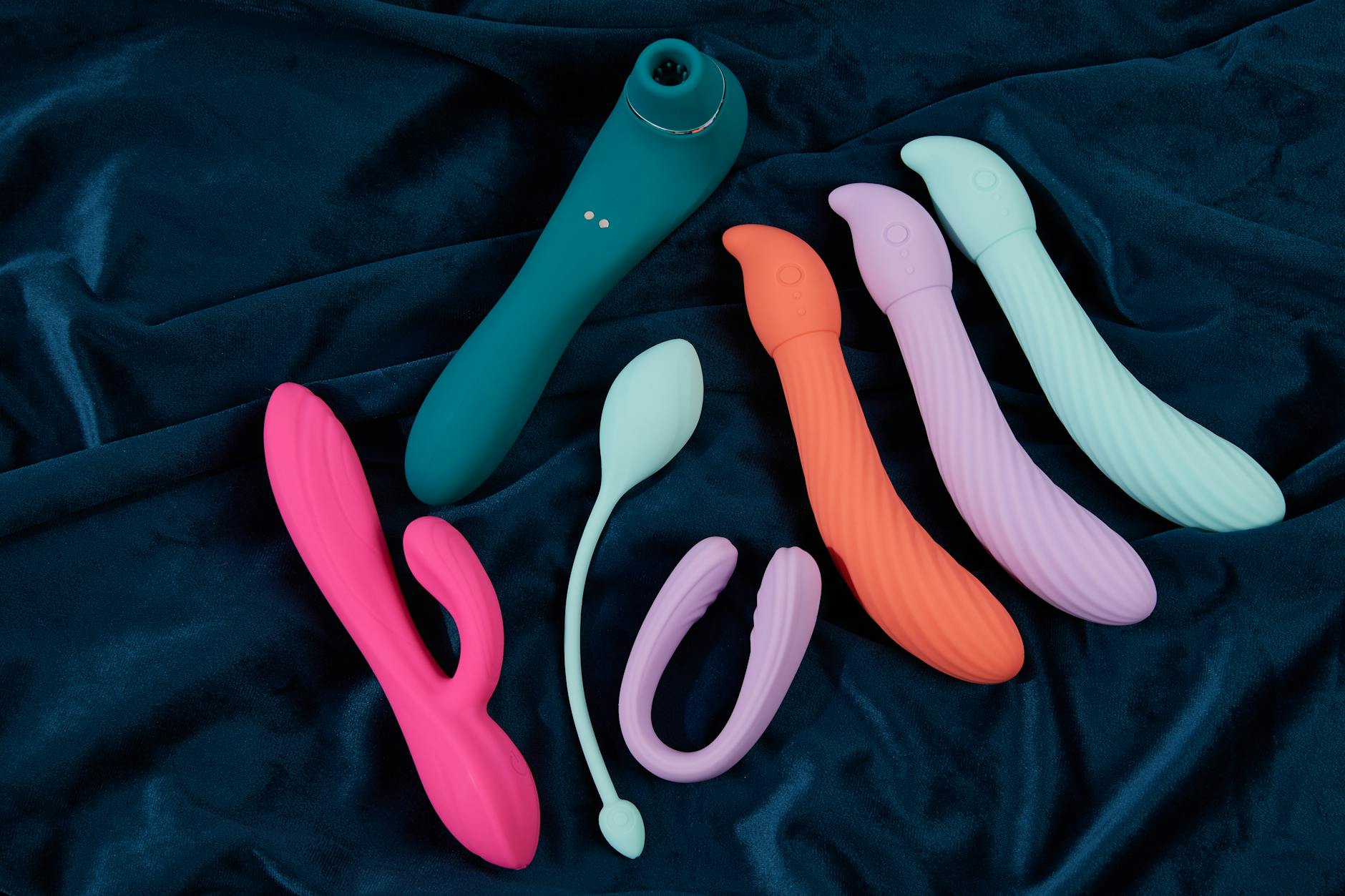
Let's be real about the awkwardness
Buying a vibrator together can feel like crossing some threshold where you have to admit things out loud. You're shopping for pleasure with someone you're intimate with, which should feel natural and doesn't always. The discomfort is real, and it's completely normal. Most couples I work with tell me that the conversation before buying felt harder than the actual experience using it.
Here's what I've learned from two decades of working with couples: the awkwardness dissolves fast once you're actually talking about it. The problem isn't that you want something new. The problem is usually that you haven't named it yet.
Why couples buy lemon vibrators together (it's not what you think)
Most people assume couples buy vibrators to fix something broken in their sex life. That's rarely the case. What actually happens is this: one partner feels curious, or one partner wants to deepen sensation, or one partner has been struggling with reaching orgasm and knows that air-suction lemon vibrators work better for their body than anything else.
The conversation usually starts with a single sentence. "I've been thinking about trying something" or "I read that lemon clitoral vibrators help with this" or even "I want to feel something different." That sentence terrifies people for about five minutes. Then it becomes logistical. Then it becomes fun.
What I'm telling you: you're not broken. You're exploring. And shopping together—instead of secretly—is actually a sign that you trust each other.
Starting the conversation without it imploding
Timing matters. Don't bring it up during sex or right before. Pick a moment when you're both relaxed and clothed: Sunday morning coffee, a drive, sitting on the couch before bed. Somewhere neutral.
Start simple. Not "our sex life needs fixing" but "I want to try something new" or "I've been curious about exploring this together." The specificity depends on your dynamic, but the anchor is the same: this is about you wanting more, not about them being insufficient.
If your partner seems hesitant, ask why. Is it jealousy? Performance anxiety? Fear that the vibrator will replace them? Each of those is a different conversation. A lot of men worry that vibrators mean they're not enough. That's worth addressing directly: a lemon vibrator is not competition. It's addition. It's a way for you to experience your body differently, which you then get to share with them.
Once the initial conversation lands, the shopping part becomes much easier.
What to actually look for in a lemon vibrator for couples
Not all lemon vibrators are the same, and picking the wrong one can make the whole experience feel like a chore instead of fun. Here's what matters:
Size and portability. If this is your first time shopping together, you want something that doesn't feel intimidating to hold or use in front of your partner. Larger wand vibrators can feel clinical or too powerful right away. Air-suction lemon vibrators like the Lem are smaller, less visually dramatic, and easier to integrate into partnered play without feeling like you've introduced hospital equipment into the bedroom.
Noise level. This matters more than people admit. A vibrator that sounds like an angry dentist drill kills the mood fast. Look for models marketed as "quiet" or "whisper-quiet." You want to hear each other, not the toy.
Material. Medical-grade silicone is the standard. It's body-safe, easy to clean, and durable. If either of you has sensitive skin, confirm the material matches your needs before you buy.
Vibration patterns and intensity. For a first-time couple purchase, you want something with variable intensity. This matters because what feels good solo might feel overwhelming with a partner watching. Adjustable settings let you find the sweet spot in the moment.
How to actually shop together (online or in-store)
If you're shopping online, read reviews together. Not for entertainment (though some are hilarious), but for real information. Reviews tell you what the actual experience feels like, not what marketing promises. Look for comments about noise, intensity, battery life, and whether it actually feels good. That's what matters.
If you're shopping in a physical store, go at an off-peak time. You don't want to feel rushed. Pick one person to ask staff questions if you get stuck. That person is the designated spokesperson. It takes pressure off both of you and makes it feel less like you're on display.
Whichever method you choose, don't overthink it. You're picking a toy, not a marriage counselor. Most lemon vibrators in the $65–$99 range are solid. Pick the one that seems like it fits your vibe—literally and figuratively—and move forward.
Setting expectations for actually using it together
Here's where most couples stumble: they buy the vibrator and then stare at it like it's supposed to magically transform their sex life. It won't. It's a tool, not a solution.
Before you use it, talk about how. Will your partner use it on you? Will you use it on yourself while they're involved? Do you want it integrated into foreplay or as the main event? These conversations feel clinical, but they prevent the awkward "so what do we do now" moment mid-sex.
Start slow. Your first time using it together, don't expect fireworks. You're both adjusting to something new. That's fine. It might take a few sessions before it feels natural.
One thing I tell couples: if the first time feels weird, that's normal. Pleasure with another person present changes the experience. Your body might respond differently than it does alone. That doesn't mean you picked the wrong vibrator. It means you need time to adjust.
The conversation after is sometimes more important than the purchase
Once you've used it together, check in. What felt good? What didn't? Would you use it again? This is actually the moment where couples deepen their connection, because you're talking about sensation and desire and what your body likes. That's vulnerable. That's also where real intimacy happens.
If it didn't work, figure out why. Was the intensity wrong? Did the mood feel off? Was it a mismatch between what you imagined and what actually happened? Those are all fixable. You don't need a different vibrator. You need a different approach or setting.
Some couples find that adding a lemon clitoral vibrator completely shifts their sex life. Others use it occasionally. Both outcomes are fine. The point isn't to become a vibrator couple. The point is that you tried something together and you were honest about it.
Why lemon vibrators specifically work for couples
Lemon vibrators—particularly air-suction models—have become popular for couples because they're less intimidating than larger wand vibrators, they deliver sensation that's different from penetration, and they're intuitive to use. There's no learning curve. You pick it up, turn it on, and your body immediately understands what's happening.
If you want a specific recommendation: the Lem is the lemon clitoral vibrator most couples I work with start with. It's compact, quiet, powerful without being brutal, and it looks nice sitting on a nightstand. It's not the cheapest option, but it's reliable. That matters when you're introducing something new.
Beyond the specific toy, what matters is that you picked it together. That act—of choosing something and committing to trying it—is where the real shift happens. You've named your desire. You've included your partner. You've decided to explore. The vibrator is just the object. The conversation is the relationship work.
People also ask
Will a lemon vibrator change our dynamic?
Not unless you want it to. Most couples find that adding a vibrator to their sex life feels like a small expansion, not a fundamental shift. You're still you. Your partner is still them. You're just exploring sensation together. That said, the conversation that precedes the purchase often does change dynamics in good ways because you're talking openly about pleasure.
What if my partner thinks I'm asking because I'm unhappy?
That's exactly why the framing matters. Lead with curiosity, not critique. "I want to explore this" is very different from "this isn't working anymore." If your partner does interpret it that way, address it directly. Reassure them that you're asking because you want more, not because what you have isn't enough. Those are two different things.
How do I bring this up if we've never talked about sex openly?
Start smaller. Share an article. Say you read something interesting. Let them see it first so it feels less like an ambush. Sometimes the permission to talk about pleasure comes from a third source—a book, a website, a friend mentioning it—before it comes from your partner. That's fine. It's still a conversation.
What if my partner says no?
Respect that. You asked. They answered. The conversation didn't go the way you hoped, and that's information about where they are. You can revisit it later, or you can accept that this isn't something you do together. Either way, you tried to include them, and that matters. Some couples use vibrators solo. Some use them together. Some don't use them at all. None of those choices are wrong.
Is it weird if we don't use it that often?
Not at all. Most couples buy vibrators with intention and then use them occasionally. That's how it usually works. You tried something, it felt good or interesting or neither, and now it lives in your bedside drawer for whenever you want it. You don't need to use it every time you have sex for it to be a worthwhile addition to your relationship.
How much should we spend?
Lemon clitoral vibrators range from about $45 to $120. For a first-time couple purchase, I'd suggest aiming for the middle range—$65 to $89. That's high enough that the quality is solid and low enough that you won't feel like you've made a massive financial commitment if it turns out not to be for you. The Lem sits in that sweet spot and is widely recommended by couples who started here.
The part nobody tells you
Honestly, the hardest part of buying a vibrator together isn't picking the toy. It's having the first conversation. After that, it gets easier. You've already said the scariest part out loud. Shopping is just logistics. Using it together is just sensation. The courage is in the naming.
Your pleasure matters. Your partner's willingness to explore it with you matters. And the fact that you're thinking through how to do this thoughtfully—instead of secretly, instead of with shame, instead of letting it become a source of distance—already says something important about your relationship. You're building toward deeper intimacy, even if it doesn't always feel like it.
Start the conversation. The vibrator will follow.